
Hello folks! If new iPhone and Mac prices have made you wince lately, Apple just made a move that might actually help. On July 28, Apple is launching a new leasing program called Apple Upgrade, built with the Swedish fintech company Klarna, that lets you pay for a device month to month instead of all at once.
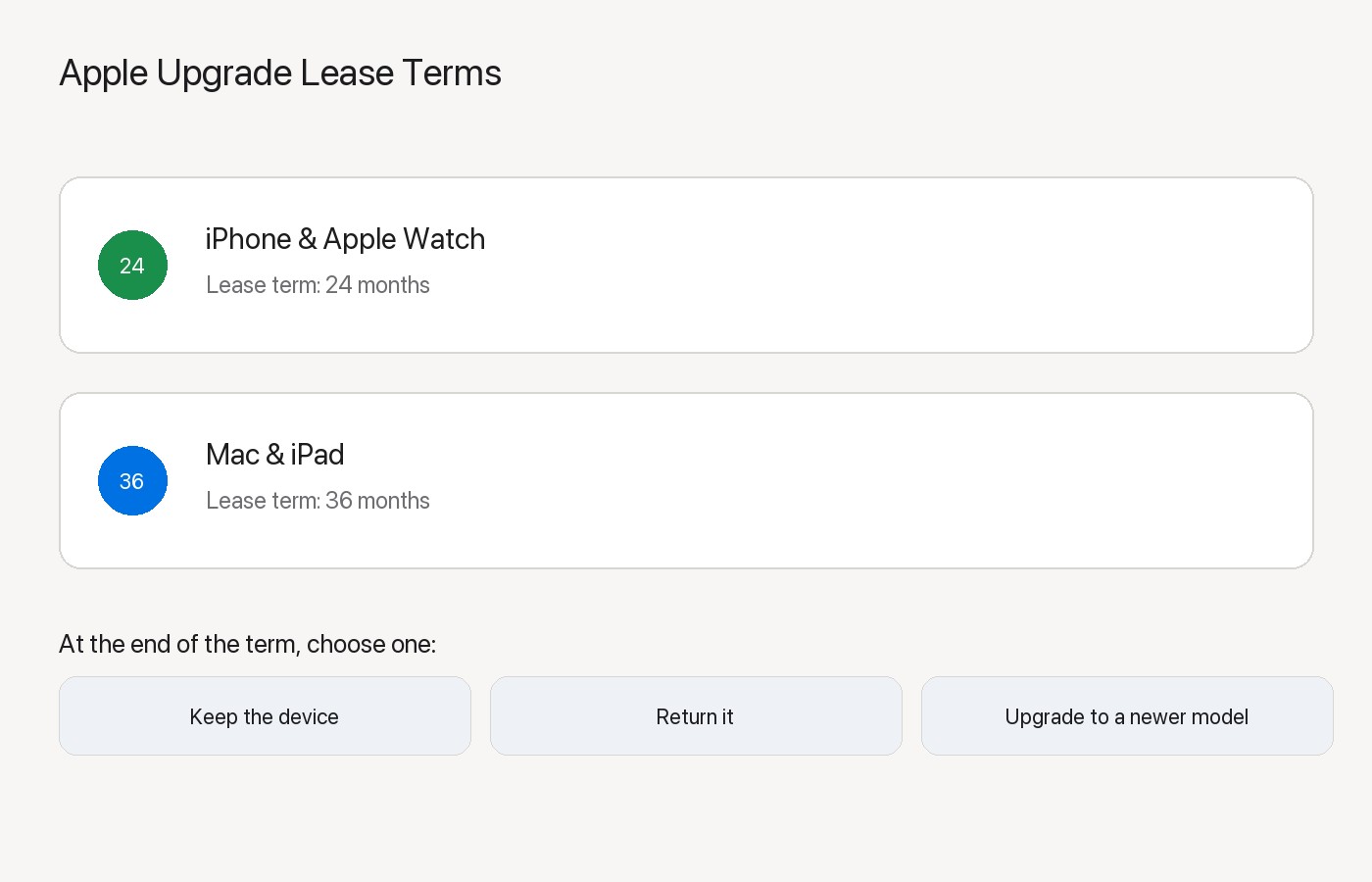
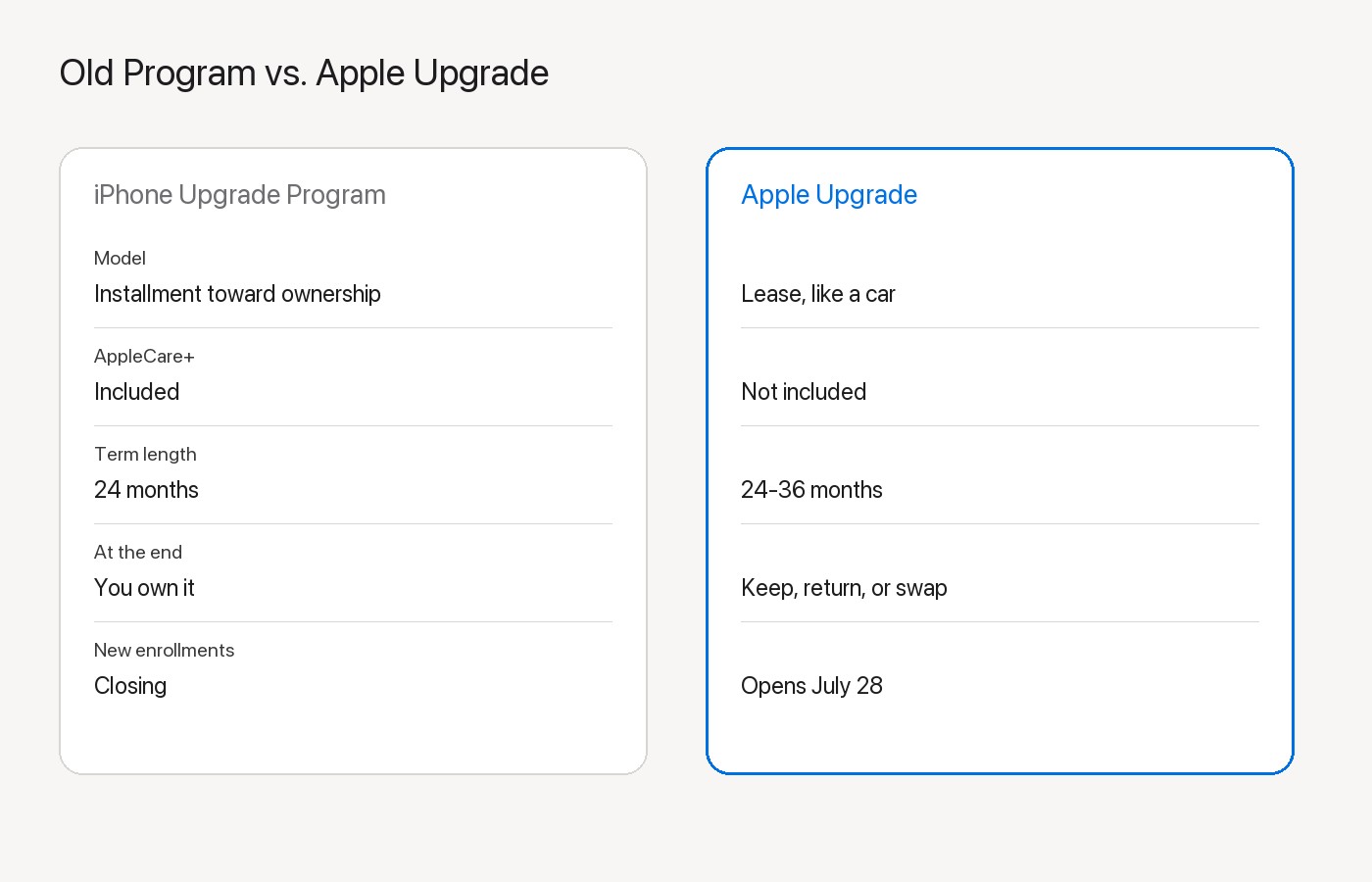
Quick answer: Apple Upgrade is a new leasing plan, launching July 28, 2026, that lets US customers lease an iPhone, Mac, iPad, or Apple Watch through Klarna with a simple credit check. You pay monthly for 24 months (iPhone, Apple Watch) or 36 months (Mac, iPad), and at the end you can keep the device, hand it back, or move to a new one. It replaces the old iPhone Upgrade Program and does not include AppleCare+.
What actually happened
Apple confirmed it’s rolling out Apple Upgrade on July 28 in the United States. Instead of financing a device the old way, where you’re building toward ownership from day one, this works more like leasing a car. You make a monthly payment, and you never technically own the device unless you choose to buy it out at the end of the term.
This isn’t a small tweak. Apple is closing new enrollments in its current iPhone Upgrade Program and standard device financing to make room for it. If you’re already in the old program, existing plans should keep running as-is, but anyone financing a new device after July 28 will be looking at Apple Upgrade instead.
The key details: terms, pricing, and what’s excluded
Here’s what we know so far, pulled straight from Apple’s own plans and reporting from outlets that have seen the details:
- Lease length: 24 months for iPhone and Apple Watch, 36 months for Mac and iPad.
- Credit check: Klarna runs a soft credit check to approve you, similar to what you’d see applying for a store card.
- At the end of the term: you can keep the device (often for a final buyout payment), trade it in for something newer, or simply return it.
- What’s not included: AppleCare+ isn’t bundled in, so you’ll need to add it separately if you want accidental damage coverage.
- What’s excluded from the program: entry-level models like the iPhone 16, the base iPad, the Apple Watch SE, and the MacBook Neo aren’t eligible. Business and education purchases are also left out for now.
- Some fees apply: a handful of transactions will carry extra charges, though Apple hasn’t published a full fee schedule yet.
Why this matters if you’re not an Apple shareholder
Device prices have climbed for a few years running, and a lot of people are holding onto their phones and laptops longer because of it. Apple Upgrade is a pretty direct response to that. Lower monthly payments make a new iPhone or MacBook feel more reachable, even if the total cost over the lease ends up close to what you’d pay buying it outright.
I’ll be honest, the “similar to a car lease” comparison is the right one to keep in your head. Leasing a car usually costs more over time than buying it and driving it into the ground, but it lowers the monthly hit and lets you swap to something newer more often. Apple Upgrade looks built around that same trade-off, and Apple is betting people will take it, especially with prices where they are right now (see our look at Apple’s recent Music and Apple One price hikes for the bigger pattern here).
One thing worth flagging before you get excited: no AppleCare+ means you’re on the hook for a cracked screen or water damage unless you pay extra for coverage on top of your lease payment. Factor that into the real monthly cost before you compare it to buying outright.
How to get in on it
Apple Upgrade goes live July 28 in Apple Stores and on Apple’s website, for US customers only at launch. You’ll apply through Klarna’s credit check during checkout, the same way you’d sign up for the current iPhone Upgrade Program today. There’s no early sign-up list that we’ve seen reported, so the simplest move is to just check apple.com or your local Apple Store on or after the 28th if you’re planning a device purchase around then.
If you’re mid-cycle on a device and thinking about whether to wait, it might also be worth reading our take on Apple’s upcoming M6 chip and whether you should hold off on a new Mac, since that timing question now has a new financing option layered on top.
What’s next
Apple hasn’t said whether Apple Upgrade will expand outside the US, or whether AppleCare+ will eventually get folded in as an add-on tier. Given how big a shift this is to Apple’s sales model, don’t be surprised if the terms get adjusted within the first few months based on how many people actually sign up. We’ll update this post if Apple publishes an official fee schedule or expands eligibility.
Frequently asked questions
What is Apple Upgrade?
It’s a new leasing program from Apple, backed by Klarna, that lets you pay monthly for an iPhone, Mac, iPad, or Apple Watch instead of buying it outright or using a traditional installment plan.
When does Apple Upgrade launch?
July 28, 2026, in the United States. Apple hasn’t announced international availability yet.
Does Apple Upgrade include AppleCare+?
No. AppleCare+ is not bundled into the lease payment, so you’ll need to purchase it separately if you want damage coverage.
Which devices are not eligible for Apple Upgrade?
The iPhone 16, the base-model iPad, the Apple Watch SE, and the MacBook Neo are excluded, along with business and education purchases.
Would you actually lease your next iPhone or Mac if it meant a lower monthly payment, or would you rather just save up and buy it outright? Let us know in the comments.